
Ashes of the Empire is the eighth set for the Star Wars Unlimited trading card game from Fantasy Fight Games. This time, the set is themed around the fall of the Empire form the Battle of Endor in Return of the Jedi to before the sequel trilogy. Of course, after Return of the Jedi, the most notable piece of Star Wars media in that era is The Mandalorian which actually has the most representation in this set. Followed by The Mandalorian are it’s connecting shows like Ahsoka, The Book of Boba Fett, and Skeleton Crew, but besides that, there isn’t much mainstream media left. So I decided this would be the perfect set to break down all the represented media amongst the cards that include novels, short stories, and video games.
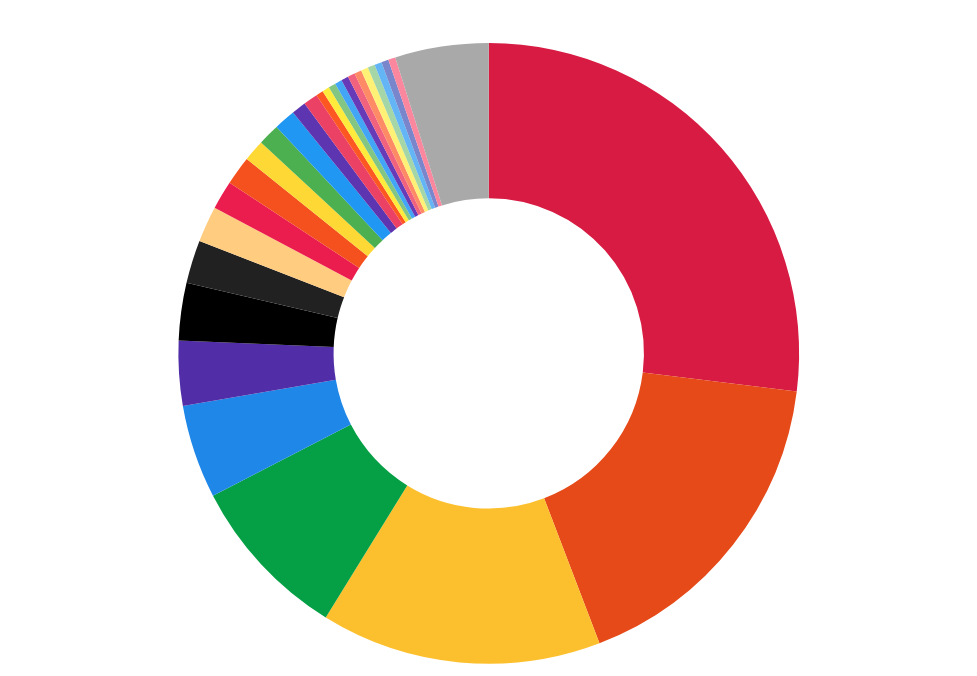
Every set has a few cards in it that seem to be inventions by the artists or the design team. If I was unable to find the exact origin of the card, I put it in my miscellaneous category that I have labeled “other.” If I found exact inspiration for the image on the card, but it’s not pulled from an actual scene from Star Wars, I put it in the category that the inspiration came from. The majority of cards come from the post-Empire era, but there are still a few outliers from across the Star Wars timeline, most notably Rebels, as most, if not all characters appear in the Ahsoka series. Also The Clone Wars, for the large amount of well known Mandalorians that fit in with the massive amount of Mandalorians here in this set.
In that graph below, I’ve ordered all the media sources in order of greatest to least. You can hover over the graph and see the name, the number of cards, and the percentage of the set if made up of that source. Below that, I will breakdown some of the more obscure sources and why I’m excited for their inclusions. This time I will be looking at the literary side of Star Wars, but if you show an interest in more, I may do more articles like this one detailing the other sources.
Star Wars: Aftermath

Aftermath was part of the Journey to The Force Awakens publishing initiative, and was released slightly before the film in September of 2015. It follows Temmin “Snap” Wexley, a Resistance pilot from The Force Awakens, as a boy, as well as the Imperial Shadow Council, trying to put the Empire back together after the death of Emperor Palpatine. There are also short chapters of the book that take a look at how the rest of the galaxy is doing post-Return of the Jedi, and this is where notable characters such as Cobb Vanth from The Mandalorian originates from.

I recently read Aftermath about two years ago for the first time, and I really enjoyed the story and the new and returning characters like Rae Sloane who came from the Rebels novel A New Dawn about how Kanan Jarrus and Hera Syndulla met. Aftermath has had two sequels, with all three books taking the reader from the end of Return of the Jedi to the Battle of Jakku, in which we see the aftermath of in The Force Awakens. This makes Aftermath the perfect inclusion in a set based around the post-Imperial era as it deals directly with the Ashes of the Empire. Some of the cards we get based on this book are a Grand Admiral Sloane leader, a Gallius Rax unit, and a Ravager unit.
Star Wars: Alphabet Squadron

Alphabet Squadron is another post-Return of the Jedi trilogy, fitting it into the theme of this set. Tasked by New Republic General Hera Syndulla, Alphabet Squadron tracks down a rogue Imperial group of TIE fighters. The first book also crosses over with Marvel’s TIE Fighter series that was going on at the time. Cards from this book would have also fit well in set four, Jump to Lightspeed, but I’m happy we’re getting some representation here. In Ashes of the Empire, there is one prominent card representing this book series in the form of an Alphabet Squadron U-Wing unit. I also included the TIE Striker in the Alphabet Squadron category, which appeared in the later two books of the series. It would maybe fit better in a Rogue One category where it was heavily featured in merchandising, but I decided to add it to a category that was already existing rather than create a new one, since there is no clear source of where this TIE Striker comes from on the card itself.
Star Wars: Lost Stars

Known as one of the best places to get into reading the new Star Wars canon, Lost Stars is a romance novel that is loved by many fans. Also part of the Journey to The Force Awakens, Lost Stars takes place from 6 BBY to 5 ABY, and includes the Battle of Jakku, making it a perfect inclusion for this set. Corona Four is the unit representing this book. The main character, Thane Kyrell flew as Corona Four during the Galactic Civil War during many pivotal battles for the Rebel Alliance and the New Republic.
“There is one more week until Ashes of the Empire releases, and I am so excited to start pulling some of these cards…”
Star Wars: Shattered Empire

Shattered Empire is one of my favourite Star Wars comic series. Following Shara Bey and Kes Dameron, the parents of Poe Dameron from the sequel trilogy, Shattered Empire covers some of the immediate clean up following the Battle of Endor in Return of the Jedi, and overlaps with other media sources from the same time like Battlefront II. Like a lot of the other sources on this list, it is also part of the Journey to The Force Awakens publishing initiative. Shattered Empire takes Shara, Kes, and the heroes of the Rebellion to Naboo, one of the targets of the Empire’s Operation: Cinder. The Rebellion worked together with the queen of Naboo at the time, Queen Soruna, to defend the planet in the Battle of Theed. Operation: Cinder was also a major plot point in the story of Battlefront II, and the Battle of Theed is actually a playable level in the game’s campaign. In Ashes of the Empire, we get our first card of Queen Soruna. Though her N-1 Starfighter appeared in Battlefront II, Soruna only ever physically appeared in the Shattered Empire comic, so that’s why it has it’s own category here on my chart.
Star Wars: Blade Squadron

Blade Squadron is a series of short stories published in the Star Wars Insider magazine, and is actually the very first canon Star Wars story outside of the six original films and The Clone Wars TV show. Blade Squadron takes place before the Battle of Endor, and follows Blade Squadron outfitted in their new B-Wing starfighters as they lead a suicide mission against the Imperial Star Destroyer Devastator in support of the Rebel Alliance’s plan to lead an assault on the second Death Star. The card included in Ashes of the Empire is Blade Three, piloted by Gina Moonsong, who took part in the Battle of Endor and Malastare in Blade Squadron and Blade Squadron: Zero Hour. The subtitle on the Blade Three unit is “Bane of the Devastator,” which ties in well to the story. Blade Squadron and it’s following short stories are tied closely into the Aftermath novel series taking place at the same time.
Star Wars: The High Republic: The Rising Storm

In my graph, I simplified it to “The High Republic,” but according to an article on the Star Wars Unlimited website, the specific book this Elzar Mann card comes from is The Rising Storm. Now, even though this book and card has nothing to do with the Ashes of the Empire, I am happy to see more High Republic representation that started back in Legends of the Force. I’ve been reading The High Republic in chronological order (starting with Light of the Jedi, then going back to Phase II) and I’ve really been enjoying it. We’ve even seen we’re getting another Avar Kriss card, this time in the form of a unit, in the new Icons mini-set.
War of the Bounty Hunters Trilogy

Another source that doesn’t fit the theme of Ashes of the Empire, The War of the Bounty Hunters trilogy takes place between The Empire Strikes Back and Return of the Jedi, and follows Qi’ra from the Solo movie as the leader of Crimson Dawn. The first part of the trilogy, War of the Bounty Hunters details the whereabouts of Han Solo as he’s frozen in Carbonite, and includes the auction of Han Solo that took place on Qi’ra’s ship, the Vermillion. The Vermillion was actually included in A Lawless Time, so thematically, this new Qi’ra card pairs very well with that one. Hopefully one day we can make a whole Crimson Dawn deck. The art on the card depicts a scene abord the Vermillion where Qi’ra takes on Darth Vader as he intrudes on the auction. She uses a form of hand-to-hand combat designed to fight force users called Teras Kasi, taught to her by Maul and Dryden Vos, to take on the dark lord. The subtitle on Qi’ra’s new unit card reads, “Master of Teras Kasi,” perfectly fitting the scene represented here. One more thing is that I love the comic-y style on this card. I immediately recognized the art of Derek Laufman. He will actually be at Fan Expo Canada this year, so I hope to get this card signed by him when I go.
I am very grateful for all the love Star Wars literary fans are getting this set, and I’m very excited to see the future obscure sources that Star Wars Unlimited puts in their sets to come. There are many more sources besides the ones I detailed here, so if you’re interested in hearing my opinions about more of the sources, feel free to reach out or leave a comment, and I’ll make another article like this one. There is one more week until Ashes of the Empire releases, and I am so excited to start pulling some of these cards representing the media I love. Check out my list of all the new cards coming with Ashes of the Empire, and my article about the Specters returning to Star Wars Unlimited!
May the Force Be With You!
Comments
One response to “Star Wars Unlimited: Ashes of the Empire – Card Representation Breakdown”
Ethan Watts, Great post on breaking down the all the Star Wars media sources included in Ashes of the Empire. I always look forward to new expansions as I too enjoy taking a deeper dive into some of the more obscure media sources. This is an area in content creation that gets overshadowed by competitive play but peaks my interest in either collaborating with you on or seeing more content.